Posts

Showing posts with the label Android

OnePlus 9 and 9 Pro unveiled with Hasselblad cameras, 120Hz display, upgraded charging

Image
OnePlus warmed up the crowd a few weeks ago by announcing its three year, $150 million partnership with legendary camera maker Hasselblad. Hasselblad cameras flew on Apollo 11 to the moon, now they come equipped on the latest Snapdragon 888 flagship. The OnePlus 9 Pro introduces Fluid Display 2.0 and Warp Charge 50 Wireless charging. It also has a bespoke Sony IMX789 image sensor in its main camera. The vanilla model has its own upgrades. The headlining feature this generation is the camera that Hasselblad helped develop and the OnePlus 9 Pro has the best version. On its first go-around in the smartphone segment, the Swedish camera maker focused on improving the color science of the two phones. The main camera uses a IMX789 sensor that was co-developed with Sony. It’s a large 1/1.43” sensor with 1.12 µm pixels, 48MP resolution. It features the latest camera technologies, including dual native ISO, Digital Overlap HDR (DOL-HDR) and 2x2 on-chip lens (OCL). And OIS, of course. This sensor...

Oppo Find X3 Pro is official with two 50MP cameras and unique design

Image
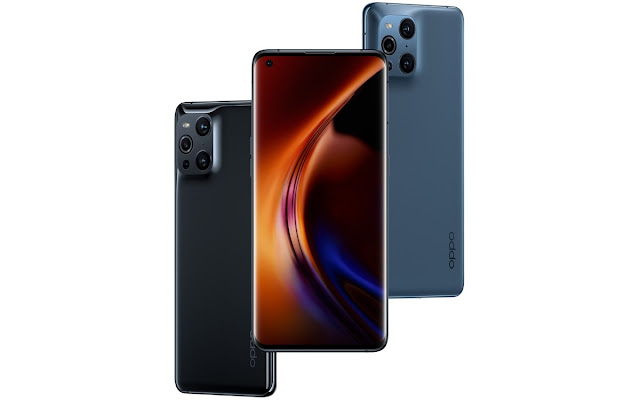
The new Oppo Find X3 Pro is finally here - the flagship brings two 50MP cameras, a new 10bit screen with adaptive refresh rate, and the latest Snapdragon 888 chipset. Arguably its most impressive feature however is the design of the back, which is manufactured from a single piece of glass that flows seamlessly in a continuous curve. The phone has a 6.7” LTPO AMOLED display with QHD+ resolution that allows the refresh rate to go between 5Hz and 120Hz, giving you extra smoothness when needed and battery savings when not. The Find X3 Pro also has a 240Hz touch sampling rate. The quad-camera setup on the back features two Sony IMX766 sensors (each of them 1/1.56” in size) - one for the main wide-angle camera behind an f/1.8 lens, the other for the ultra-wide-angle shooter sitting behind an f/2.2 lens. The main cam also offers OIS, EIS, and All Pixel Omni-directional PDAF that should deliver quick and accurate focus in all lighting conditions. There is also a 13 MP f/2.4 telephoto camera th...

Samsung Galaxy S21 Ultra announced with S Pen support, dual telephoto lenses

Image
The Galaxy S series has been around for over a decade but this year we’re starting to see some major changes as the company reshuffles its portfolio. The division between the S Ultra and the other S-phones has become quite stark, at the same time the division between the S Ultra and Note Ultra has blurred. Samsung introduced the Ultra badge a little under a year ago. Back then, the camera was the major difference between it and the Plus model. That is true this year as well, but the display has emerged as another important distinction. Easily the most impressive of the three new models is the Samsung Galaxy S21 Ultra, which marks a number of firsts for the Galaxy line (the S family especially). And as we said, it’s all down to the screen and the camera. The 6.8” Dynamic AMOLED 2X panel is a tad smaller than last year, but still has curved sides and now Gorilla Glass Victus protection. And it kept its 1440p+ resolution while the other two S21 models dropped to 1080p+. This is Samsung’s ...

Samsung Galaxy S21 and S21+ bring new design, modest upgrades

Image
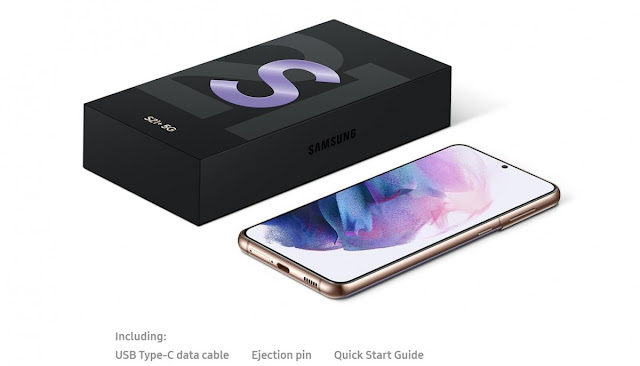
With the Ultra having the clear technological superiority, the Galaxy S21 and S21+ offer to fill smaller pockets and smaller budgets instead. In fact, these two are €50 cheaper than their 2020 predecessors (if you look at the 5G models). The Contour-Cut camera and dual-tone paint jobs help these two stand out from the crowd. Their flat screens are similarly distinctive in an age where “premium” equates to “curved screen”. These two phones are nearly twins in terms of hardware, but their size makes them easily to tell apart. And it’s exactly their size and what that entails that make them different. So, we’ll start with what the two models have in common. Let’s get it out of the way – yes, both the S21 and S21+ have 1080p+ displays, a downgrade from the 1440p+ resolution of the S20 series. The new panels have an adaptive refresh rate, however, which adjusts depending on the content from 48Hz to 120Hz. Hiding behind the display is an ultrasonic fingerprint reader that 70% larger than las...

Meizu 17 series go official with 6.6” AMOLED displays, quad cameras and Snapdragon 865

Image
After a lengthy teaser campaign, Meizu finally unveiled its latest flagships with the Meizu 17 and 17 Pro. Spec-wise the two are nearly identical with the Pro featuring better auxiliary cameras, wireless charging and faster RAM. Visually the two are also almost indistinguishable with the only difference being the 17 Pro comes with a ceramic back. These are also the first 5G entries in Meizu's lineup. The Meizu 17 duo is built around 6.6-inch Super AMOLED displays with 90Hz refresh rate and a first for Meizu punch-hole cutout for the 20MP selfie camera. The panels come with an in-display fingerprint scanner, 19.5:9 aspect ratio and are HDR 10+ compliant. There’s also a dual speaker setup and Meizu’s new mEngine 3.0 haptic engine. Around the back, both phones rely on the 64MP Sony IMX686 as their primary shooter. The Meizu 17 Pro brings an 8MP telephoto module that promises up to 8x lossless zoom as well as a 32MP ultrawide shooter capable of capturing 129° stills. The fourth ...

Huawei nova 7, 7 SE and 7 Pro debut with 64MP cameras and 5G

Image
After several weeks of leaks and speculations, Huawei officially took the wraps off its nova 7 series comprising of three devices – the nova 7 Pro, nova 7 and nova 7 SE. All three phones come with 5G connectivity, 64MP main cameras and 4,000 mAh batteries with 40W fast charging. The main differences come in the displays and chipsets where the nova 7 and 7 Pro pack the Kirin 985 while the 7 SE relies on the Kirin 820. Nova 7 Pro The Huawei nova 7 Pro 5G is built around a curved 6.57 OLED display with FHD+ resolution and a 19.5:9 aspect ratio. The panel features a dual punch hole cutout for the 32MP and 8MP selfie cameras and a built-in fingerprint scanner. Around the back, we find a 1/1.7” 64MP main shooter, alongside an 8MP ultrawide snapper and an 8MP periscope module with OIS capable of 5X optical and up to 50X hybrid zoom. The fourth module is a 2MP macro shooter. The Kirin 985 chipset sits at the helm, aided by 8GB RAM and 128/256GB storage. There’s also a 4,000 mAh b...

Motorola Edge+ brings S865, 5G and 108MP camera, Edge joins in with S765

Image
Motorola is jumping head first into the 5G market with two new “edge” phones – named after what the company calls “Endless Edge”, its interpretation of the waterfall screen. Both phones share this design, as well as 5G connectivity and a capable triple camera. Motorola Edge+ The Motorola Edge+ is Moto’s first proper flagship in a while and it makes up for lost time by marking several “firsts” for the brand. For starters, this 6.7” HDR10+ AMOLED panel is the first Motorola with a 90Hz refresh rate. The 1080p+ resolution isn’t quite “premium”, but looking at it positively, it uses less energy. A 25MP selfie camera sits in the punch hole in the upper left corner and there is an in-display fingerprint reader hiding behind the display. The US version of the Edge+ supports mmWave 5G, which promises up to 4Gbps download speeds working on Verizon’s network, the launch partner in the US. This is Moto’s first proper 5G phone (not counting any MotoMod experiments). Global...

OnePlus 8 unveiled with 48MP camera and SD865, 8 Pro gets bigger sensor, 120Hz screen

Image
They are here and let’s get this out of the way first – OnePlus kept its promise that its phones will be under $1,000. Indeed, the full-loaded Pro phone is $999 and the base configuration is $100 below that. The vanilla OnePlus 8 starts at $700. The two new models will be available on OnePlus.com starting on April 29 and will also sell through Amazon in the US as well as the major carriers. OnePlus 8 Pro The OnePlus 8 Pro comes with a new 6.78” Fluid AMOLED display, the largest for the brand yet, and its first to hit 120Hz refresh rate. The screen comes with 240Hz touch sampling rate to minimize input lag. The display is calibrated at the factory achieving a record-setting color accuracy. It’s a 10-bit panel with HDR10+ support. HDR Boost will take old 8-bit content and enhance it. There’s also MEMC, which can interpolate 24fps video to 120fps. That’s a “love it or hate it” feature, but OnePlus also did extensive optimizations to the software to ensure that the interface fl...